
How Content Pruning Helps Keep SEO Resources Focused and Useful
As websites grow, content libraries can become crowded. Older blog posts, outdated service pages, thin articles, and overlapping resources may remain live long after they stop serving users well. Content pruning helps businesses review those assets and decide what to keep, update, combine, or remove.
The goal is not to delete content aggressively. It is to make the website more useful, focused, and easier to navigate. A cleaner content library can support better user experience and more effective search performance.
Understand What Content Pruning Means
Content pruning is the process of reviewing existing pages and improving the overall quality of the website. Some pages may need to be refreshed. Others may be merged with stronger resources. A few may be removed if they no longer provide value.
Pruning decisions should be based on data and user intent, not assumptions. A page with low traffic may still be useful if it supports conversions or answers an important niche question. A page with traffic may still need improvement if users leave quickly.
This supports SEO strategy services because it helps businesses focus on content that serves users and supports long-term visibility.
Identify Pages That May Need Review
Not every old page is a problem. Some older content continues to attract qualified visitors and build trust. The pages most likely to need review are those that no longer match current search expectations or business priorities.
Content pruning candidates may include:
Outdated articles
Thin pages with limited useful detail
Pages that repeat the same topic
Old announcements with no ongoing value
Pages with traffic but poor engagement
Pages that no longer match current services
Resources with broken links or outdated CTAs
These pages can weaken the user experience if left unmanaged.
Decide Whether to Update, Combine, or Remove
Pruning does not always mean deletion. Many pages can be improved with updates. Others may perform better when combined into a stronger, more complete resource.
A practical decision process may include:
Update pages that have value but outdated information
Combine pages that cover similar topics
Redirect removed pages when appropriate
Keep niche pages that serve a clear purpose
Improve internal links to important resources
Google’s Search Essentials notes that core practices can influence how content appears in Google Search and that site owners should help Google understand content such as images, videos, structured data, and JavaScript.
Use Analytics to Guide Decisions
Analytics helps make pruning more accurate. Instead of relying only on page age or traffic volume, teams can review how users behave after arriving.
Useful metrics include:
Organic traffic
Engagement time
Scroll depth
Internal link clicks
Conversions
Backlinks
Search impressions
Exit rates
A page with few visits but strong conversions may be worth keeping. A page with many impressions but poor clicks may need a better title and meta description. A page with traffic but weak engagement may need a stronger structure.
This data-based approach supports professional SEO support by aligning content maintenance with actual performance.
Reduce Overlap Between Similar Pages
As content grows, multiple articles may begin targeting the same topic. This can confuse users and make internal linking harder. It can also spread authority across several weaker pages instead of building one stronger resource.
When overlap appears, businesses should decide which page best serves the topic. Supporting content can be merged, refreshed, or redirected where appropriate. This creates a clearer experience for users and a stronger structure for search engines.
Preserve Valuable Information
Content pruning should protect useful information. Before removing a page, review whether it contains details, examples, links, or explanations that should be kept. Valuable sections can often be moved into a stronger resource.
This helps avoid losing content that supports user understanding. The goal is to reduce clutter, not remove helpful guidance.
Improve Internal Links After Pruning
When pages are updated, combined, or removed, internal links should be reviewed. Broken or outdated links can create friction. Updated links help users move toward the best current resources.
Internal linking after pruning may include:
Pointing older high-traffic pages to refreshed guides
Linking related blogs to updated service pages
Removing links to outdated resources
Adding clearer anchor text
Connecting content hubs more logically
These updates support search engine optimization solutions because they make the site easier to navigate and understand.
Make Pruning Part of a Regular Review
Content pruning works best as an ongoing habit. A quarterly or semiannual review can help businesses catch outdated content before it becomes a larger issue.
A simple workflow may include:
Export a list of important pages.
Review traffic, engagement, and conversions.
Identify outdated or overlapping topics.
Decide whether to keep, update, combine, or remove.
Refresh internal links and CTAs.
Monitor performance after changes.
This keeps the content library healthy over time.
Keep SEO Resources Focused
A strong website does not need unlimited content. It needs useful content that reflects current services, answers real questions, and guides users clearly. Content pruning helps businesses maintain that focus.
By reviewing older pages, improving valuable resources, reducing overlap, and updating internal links, businesses can create a cleaner and more effective content library. Over time, this helps visitors find better information faster while supporting stronger search visibility and digital marketing performance.
CTA: To refine older content, reduce overlap, and keep SEO resources working effectively, explore search engine optimization services or speak with an expert.

Updating Page Titles and CTAs to Improve On-Page Performance
On-page performance depends on how clearly a page communicates value and guides users toward the next step. Two of the most important elements are page titles and calls to action. Titles influence whether users click from search results, while CTAs influence what visitors do after they arrive. When these elements are outdated, vague, or disconnected from user intent, pages may earn traffic without producing meaningful results.
Why Page Titles Matter
A page title helps users understand what a page is about before they visit. It also gives search systems an important signal about the page’s topic. A strong title should be accurate, clear, and aligned with the user’s likely search intent.
Google Search Central’s SEO Starter Guide notes that SEO best practices help search engines crawl, index, and understand content, and page presentation plays a role in how users evaluate search results. Google for Developers
For businesses investing in on-page SEO services, title optimization is a practical way to improve how existing pages perform.
Make Titles Specific and Useful
Generic titles often fail because they do not give users enough reason to click. A title should communicate both the topic and the value of the page.
For example, a title like “SEO Tips” is broad. A more useful title might focus on a specific outcome, such as improving local visibility, updating older content, or fixing pages that earn traffic but few leads.
Strong titles often include:
A clear topic
A practical benefit
Language that matches user intent
Enough detail to set expectations
Natural phrasing that avoids keyword stuffing
The goal is to help users quickly decide whether the page matches their needs.
Align Headings With the Title
Once users click, the page should deliver on the title’s promise. If the title suggests practical guidance but the page begins with broad background information, visitors may leave before finding value.
Headings help maintain that alignment. They should guide readers through the topic in a logical way and reinforce the purpose of the page. This creates a smoother experience from search result to landing page.
This alignment supports professional SEO planning because it connects search intent, content structure, and user experience.
Review CTAs for Clarity
A call to action should help visitors understand what to do next. If the CTA is vague, buried, or unrelated to the page topic, users may not take action even if they found the content helpful.
A strong CTA should be:
Relevant to the page topic
Easy to identify
Clear about the next step
Written in natural language
Matched to the visitor’s stage of intent
For example, an educational blog may invite users to read a related guide or speak with an expert. A service page may encourage consultation requests or contact form submissions.
Match CTAs to the User Journey
Not every visitor is ready to contact a business immediately. Some are still researching, while others are comparing providers or preparing to act. CTAs should reflect these stages.
Useful CTA types include:
Educational CTAs for early-stage visitors
Service CTAs for users comparing solutions
Contact CTAs for decision-ready visitors
Resource CTAs for users who need more context
Matching CTAs to intent helps reduce friction and supports better engagement.
Improve Internal Links Around CTAs
CTAs do not need to stand alone. Internal links throughout the page can guide visitors toward related resources before they reach the final call to action. These links help users build confidence and explore deeper information.
For example, a blog about page titles may link naturally to resources on content optimization, analytics, or search engine optimization services. These links support a more connected journey.
Use Analytics to Identify Weak Titles and CTAs
Performance data can show where updates are needed. Pages with strong impressions but low click-through rates may need better titles or meta descriptions. Pages with traffic but low conversions may need clearer CTAs, better internal links, or stronger page flow.
Useful signals include:
Organic impressions
Click-through rates
Engagement time
Scroll depth
CTA clicks
Form submissions
Exit rates
Reviewing these metrics helps prioritize updates.
Test and Refine Over Time
Title and CTA improvements should be reviewed after implementation. A page may need several small adjustments before performance improves. Testing different phrasing, CTA placement, or internal link paths can reveal what works best for the audience.
The goal is not to chase quick changes, but to create clearer communication. When users understand the page and the next step, they are more likely to engage.
Turn Existing Pages Into Better Performers
Improving page titles and CTAs can help existing content work harder. Many pages already have useful information and search visibility, but they need clearer entry points and better next steps.
By updating titles, aligning headings, improving CTAs, and reviewing analytics, businesses can strengthen on-page performance without rebuilding every page from scratch. Over time, these refinements can support better engagement, stronger conversions, and more effective digital marketing results.
CTA: To improve page titles, CTAs, and on-page performance, explore SEO optimization services or speak with an expert.

How Better Content Flow Helps Readers Stay Engaged Longer
Content flow affects how easily visitors move through a page. Even when the information is accurate, poor sequencing can make the article feel confusing, repetitive, or difficult to finish. Better content flow helps readers understand the topic step by step, which can improve engagement and support stronger search performance.
A well-flowing page guides visitors from the main question to supporting details and then toward the next step. This structure reduces friction and makes the content feel more useful.
Begin With the Reader’s Main Concern
The opening section should quickly confirm that the page understands the reader’s need. If visitors arrive from search and do not see a clear connection to their question, they may leave before reading further.
A strong introduction should:
Identify the topic clearly
Explain why it matters
Set expectations for what follows
Avoid unnecessary background
Lead naturally into the first main section
This approach supports content-focused SEO services because search visibility is more valuable when visitors stay and engage.
Organize Sections in a Logical Order
Content flow depends on sequencing. Readers should not have to work hard to understand why one section follows another. A useful structure often moves from basic context to deeper explanation, practical guidance, and next steps.
For example, an article about content flow might move through:
Why structure matters
How headings guide readers
How transitions connect ideas
How analytics reveal friction
How internal links support next steps
This order feels natural because each idea builds on the previous one.
Use Headings as a Roadmap
Headings help readers scan before they commit to reading. If headings are vague or disconnected, users may struggle to understand the page’s value. Strong headings act like a roadmap, showing what the article covers and where the reader should focus.
Nielsen Norman Group’s research on web reading notes that users often scan pages in patterns and may miss important content when layout and text flow make scanning difficult.
Better headings support scanning by clearly identifying each section’s purpose.
Keep Paragraphs Focused
Content flow suffers when paragraphs contain too many ideas. A dense paragraph may force readers to slow down or reread, which can interrupt momentum. Shorter paragraphs help users process information one point at a time.
Each paragraph should have a clear role. It may introduce an idea, explain why it matters, give an example, or transition to the next point. When paragraphs stay focused, the article feels easier to follow.
This readability supports professional SEO strategy because user experience and content clarity influence how visitors respond after arriving on a page.
Create Smooth Transitions Between Ideas
Transitions help readers understand how sections connect. Without them, content can feel like a list of disconnected points. A transition may show cause and effect, introduce a related issue, or explain why the next section matters.
For example, a section about headings can lead into a section about paragraph structure because both affect scanability. A section about readability can lead into analytics because user behavior can reveal where readability breaks down.
These small connections improve the flow of ideas and make the article feel more human.
Remove Repetition That Slows the Reader
Repetition is one of the most common reasons content feels bloated. A point may be valid, but if it appears in several sections without adding new value, it slows the reader down.
During editing, ask:
Does this section add a new idea?
Is this paragraph repeating an earlier point?
Can two similar sections be combined?
Does the page reach the main answer quickly enough?
Are examples helping or distracting?
Removing unnecessary repetition helps preserve momentum.
Use Lists to Support, Not Replace, Explanation
Lists can improve flow when they organize related ideas. They work well for steps, warning signs, examples, or review questions. However, too many lists without explanation can make content feel shallow.
A strong article balances paragraphs and lists. Paragraphs provide context, while lists make key points easier to scan.
Guide Readers Toward the Next Step
Good content flow should lead naturally toward action. This does not always mean a hard sell. It may mean linking to a related guide, service page, consultation option, or deeper resource.
Internal links should appear where they help the reader continue their journey. This supports search engine optimization solutions because connected content keeps visitors engaged and helps search systems understand topic relationships.
Use Analytics to Find Flow Problems
Analytics can show where readers lose interest. Low engagement time, shallow scroll depth, or weak internal link clicks may suggest that the content flow needs improvement.
A content review may focus on:
Pages with traffic but low engagement
Sections where scroll depth drops
Introductions with high exit rates
Links that users rarely click
Long pages with few conversions
These signals can guide targeted updates.
Create Content That Feels Easy to Follow
Better content flow helps readers stay engaged because the page feels clear, organized, and purposeful. Each section should move the reader closer to understanding the topic or taking the next step.
By improving introductions, headings, paragraph focus, transitions, and internal links, businesses can make content more useful without changing the entire topic. Over time, stronger content flow supports better engagement, trust, and digital marketing performance.
CTA: To improve content flow, readability, and search performance across key pages, explore SEO content services or speak with an expert.

What Local Search Engagement Metrics Can Reveal About Customer Readiness
Local search behavior often reflects real intent. When people search for nearby services, they may be close to calling, visiting, booking, or comparing providers. Engagement metrics from local listings and website analytics can help businesses understand how ready users are to act and what information they need before moving forward.
Rather than focusing only on visibility, businesses should review how users interact with local results. Calls, clicks, directions, messages, and website behavior all provide clues about customer readiness.
Visibility Shows Opportunity
Visibility metrics show whether a business appears for relevant local searches. These may include impressions, local rankings, map visibility, and search views. While these metrics are useful, they do not show whether users are interested enough to act.
A business may appear often but receive few calls or clicks. In that case, the listing may need stronger messaging, clearer service categories, better photos, or more recent reviews.
This supports local search optimization services because visibility should lead to meaningful engagement, not just appearances.
Calls Often Signal High Intent
Phone calls are one of the strongest signs of customer readiness. When users call from a local listing, they may be asking about availability, pricing, appointments, service details, or urgent needs.
Call data can help businesses understand:
Which services create the most immediate interest
What times or days generate more calls
Which locations receive stronger response
Whether listing updates affect engagement
Whether seasonal demand is changing
Google Business Profile performance reporting includes actions such as calls, website clicks, messages, bookings, and direction requests, which can help businesses review how users interact with profiles.
Website Clicks Show the Need for More Information
A website click often means the user is interested but not ready to act immediately. They may want to compare services, review details, check credibility, or understand the process before contacting the business.
Once users arrive on the site, website analytics can show whether the landing page supports that intent. If visitors leave quickly, the page may not match the listing or may not provide the information expected.
This is where professional SEO planning can help connect local listings, landing pages, and conversion paths.
Direction Requests Reflect Location-Based Interest
Direction requests are especially useful for businesses with physical locations. They suggest that users may be considering an in-person visit or comparing nearby options.
If one location receives many direction requests while another receives few, the difference may reflect proximity, reputation, visibility, or listing quality. Reviewing these patterns can help businesses improve location-specific content and profile details.
A location with strong visibility but low direction requests may need better photos, clearer business descriptions, or stronger review signals.
Messages and Bookings Reveal Action-Oriented Behavior
Messages and bookings show that users want a more direct interaction. These actions may indicate that the business profile is answering enough initial questions to encourage the next step.
Businesses should review whether these actions increase after updates such as:
Adding new photos
Improving service descriptions
Updating hours
Adding appointment links
Responding to reviews
Refreshing location pages
When these updates are tracked alongside performance data, patterns become easier to understand.
Combine Local Listing Data With Website Analytics
Local listing data shows what users do before they reach the site. Website analytics shows what happens afterward. Combining both creates a clearer picture of customer readiness.
For example:
High calls and low website clicks may suggest users already have enough information to act.
High website clicks and low conversions may suggest landing page issues.
High impressions and low engagement may suggest weak listing presentation.
Strong location page engagement may suggest users are comparing options carefully.
This combined view supports SEO performance strategy because it connects visibility with user behavior and business outcomes.
Use Metrics to Improve the Customer Journey
Local engagement metrics should guide practical updates. If users frequently click but do not convert, the landing page may need stronger calls to action, clearer service explanations, or better internal links. If calls are low, the business profile may need more persuasive information.
Useful improvements may include:
Updating business descriptions
Adding FAQs to location pages
Improving mobile usability
Adding clearer contact options
Strengthening service page content
Aligning listing links with the most relevant pages
These changes help reduce friction and make it easier for users to act.
Review Trends Over Time
Customer readiness can shift with seasons, market changes, and business updates. A single month of data may not be enough to understand the full pattern. Reviewing metrics over time helps businesses distinguish temporary changes from meaningful trends.
A monthly or quarterly review can show whether visibility is improving, engagement is increasing, and conversions are growing from local search paths.
Turn Engagement Data Into Better Decisions
Local search engagement metrics reveal more than user activity. They show how close potential customers may be to making a decision and where they need more support.
By reviewing calls, clicks, directions, messages, bookings, and website behavior together, businesses can better understand the customer journey. Over time, these insights help improve listings, strengthen local pages, and create a more effective path from discovery to action.
CTA: To turn local search engagement into better leads and stronger customer journeys, explore SEO services for local visibility or speak with an expert.

Using Structured Data to Support Better Local Service Page Clarity
Local service pages need to communicate quickly and accurately. Visitors want to know what a business offers, where services are available, and whether the page matches their needs. Search engines need similar clarity. Structured data helps support that process by giving search systems organized information about services, locations, and business details.
When structured data is aligned with the visible page content, it can strengthen local relevance and reduce confusion. It does not replace strong copy or a good user experience, but it gives local service pages a clearer technical foundation.
Clarify the Purpose of Each Service Page
Every local service page should have a specific purpose. A page may focus on one service, one location, or a combination of both. If the page tries to cover too many unrelated services or locations, it can become harder for users and search systems to understand.
Structured data can help define what the page represents. Service schema can identify the offering, while LocalBusiness schema can provide business details. Breadcrumb schema can also clarify where the page fits within the site structure.
This supports local SEO services because local visibility depends on strong service and location signals.
Match Schema With Visible Content
Structured data should always reflect what users can see on the page. If the page discusses a service area, business hours, reviews, or specific offering, the schema should support that information accurately. If a detail is not present or supported on the page, it should not be overstated in markup.
Google’s Local Business structured data documentation identifies business details such as hours, departments, and reviews as information that can help Google understand local businesses when implemented correctly.
This alignment helps maintain trust and reduces mixed signals. It also makes the page more useful for visitors because the technical markup supports the same message they are reading.
Connect Services and Locations Clearly
Many local businesses serve multiple cities or service areas. Structured data can help clarify those relationships when pages are planned carefully. For example, a location page may identify the business details for a specific office, while a service page may identify the service and area served.
A practical setup may include:
LocalBusiness schema for primary business details
Service schema for important service pages
AreaServed information where appropriate
BreadcrumbList schema for navigation
FAQPage schema when visible FAQs are present
These elements help search systems understand how services and locations connect.
Improve AI-Readable Signals
AI-driven search experiences rely on clear, consistent information when summarizing businesses and services. Structured data can help support this by defining relationships between the business, page topic, location, and service offering.
This does not guarantee visibility in AI-generated answers or rich results. However, it can make the page easier to interpret. Google’s structured data introduction notes that structured data can make pages eligible for rich result appearances in Google Search when implemented according to the relevant documentation.
For businesses investing in professional SEO guidance, this technical clarity can support a more complete search strategy.
Use FAQs Where They Help Visitors
FAQ sections can be useful on local service pages when they answer real user questions. These may include service availability, response times, pricing considerations, appointment processes, or location-specific concerns.
When visible FAQs are included, FAQPage schema may help search systems understand the question-and-answer format. The content should remain natural and useful rather than created only for markup.
Strong FAQs may answer:
What areas does the business serve?
How does the service process work?
When should someone request help?
What should customers prepare before contacting the business?
How can users compare service options?
These answers help visitors feel more confident before taking the next step.
Keep Data Consistent Across the Site
Structured data should align with other local signals, including website content, business profiles, directories, and contact information. Inconsistent details can create confusion.
A review should confirm:
Business names are consistent
Phone numbers and addresses are accurate
Hours match current operations
Service areas reflect real coverage
Page schema matches the visible topic
This consistency supports search engine optimization planning because technical, local, and content signals work together.
Review Structured Data Regularly
Local service pages change over time. A business may add new services, adjust service areas, update contact information, or refresh website content. Schema should be reviewed whenever those changes happen.
A simple maintenance process may include:
Testing structured data after page updates
Reviewing service pages quarterly
Checking Search Console reports
Updating schema after business changes
Removing markup tied to outdated content
This keeps structured data reliable and useful.
Build Stronger Local Pages Through Clarity
Structured data helps local service pages communicate more clearly. It gives search systems a machine-readable version of important business and service details, while the visible content supports the user experience.
When schema, content, and local signals are aligned, businesses create a stronger foundation for search visibility. Over time, this clarity can help service pages become easier to understand, easier to trust, and more useful across traditional and AI-driven search experiences.
CTA: To improve local service page clarity with better structure, content, and technical SEO, explore SEO strategy services or speak with an expert.

Measuring Authority Growth From Digital Partnerships and Mentions
Authority does not develop from one backlink or one campaign. It grows as a business earns recognition across relevant websites, publications, communities, and search experiences. Digital partnerships and brand mentions can provide useful signals that show whether a company is becoming more visible and trusted across the web.
Measuring authority growth requires more than counting links. It involves reviewing where the brand appears, how audiences respond, and whether external visibility supports meaningful traffic, engagement, and conversions.
Look Beyond the Number of Backlinks
Backlinks remain important, but raw totals can be misleading. A single link from a trusted, relevant industry source may provide more value than several links from unrelated websites. The quality, context, and audience of each placement matter.
A useful authority review should consider:
Relevance of the referring site
Strength of the publication or platform
Context surrounding the mention
Whether the link points to a useful page
Engagement from referral traffic
This approach supports search engine optimization strategy because it focuses on the value of authority signals rather than the volume of activity.
Track Brand Mentions Across the Web
Not every authority signal includes a backlink. A business may be referenced in an article, directory, interview, podcast, roundup, or local resource without receiving a clickable link. These mentions can still support awareness and credibility.
Brand mentions may encourage users to search for the company directly, visit the website later, or recognize the business when comparing options. Tracking these references gives teams a broader view of how authority is forming outside the website.
This matters because modern search experiences often rely on repeated, consistent signals from trusted sources. When a business is mentioned across relevant platforms, it becomes easier for users and search systems to associate that brand with specific services or expertise.
Connect Partnerships to Referral Traffic
Digital partnerships can also send qualified visitors to the website. A guest article, industry collaboration, local feature, or resource listing may introduce the business to people already interested in the topic.
Referral traffic should be reviewed for quality, not just volume. Useful metrics include:
Engagement time
Pages per session
Internal link clicks
Form submissions
Calls or consultation requests
Returning visits
If a partnership sends fewer visitors but those visitors engage deeply, it may be more valuable than a placement that sends a larger but less relevant audience.
Watch Branded Search and Direct Traffic
Authority growth often shows up indirectly. When people see a business mentioned across the web, they may later search for the brand by name or visit directly. These signals can show that external visibility is building recognition.
A practical report may compare brand mentions with changes in:
Branded search queries
Direct traffic
Returning users
Engagement from branded sessions
Conversions from brand-aware visitors
This type of analysis helps connect off-page activity with real user behavior.
Evaluate Topic Alignment
Authority is strongest when mentions reinforce the topics a business wants to be known for. If external placements discuss unrelated subjects, they may create visibility without strengthening the right expertise.
For example, a business focused on SEO should aim for mentions tied to content optimization, local search, analytics, structured data, AI search visibility, or digital strategy. These topic connections support professional SEO support because they reinforce the relationship between external visibility and on-site expertise.
Google Search Central’s SEO documentation highlights that SEO best practices help search engines crawl, index, and understand content, which supports the need for consistent signals across a business’s digital presence.
Review Links to Priority Pages
Off-page activity should support important website assets, not only the homepage. Links and mentions that point toward service pages, blog resources, or educational guides can help strengthen the pages that matter most.
A review should ask:
Which pages are earning external attention?
Are important service pages receiving support?
Do mentions align with current business priorities?
Are visitors moving from external placements to related content?
Do linked pages have clear next steps?
This ensures that authority-building supports the larger content and conversion strategy.
Build a Consistent Reporting Framework
Authority growth is easier to understand when it is tracked regularly. Monthly or quarterly reporting can help identify patterns that are not visible in short-term reviews.
A useful framework may include:
New referring domains
Quality of earned links
Brand mentions
Referral engagement
Branded search trends
Ranking movement for supported pages
Conversions influenced by external traffic
This creates a clearer view of whether digital partnerships are strengthening visibility over time.
Turn Authority Signals Into Better Strategy
The purpose of authority measurement is not only to report what happened. It should guide what comes next. If certain partnerships drive engaged traffic, those relationships may deserve more attention. If mentions are growing but not connected to priority topics, messaging may need refinement.
Authority grows when external visibility, brand recognition, and user engagement work together. By measuring partnerships, mentions, referral traffic, and branded search, businesses can better understand how their reputation is developing across the web.
Over time, this turns off-page SEO from a link-building checklist into a strategic process for building trust, recognition, and long-term organic visibility.
CTA: To build stronger authority signals and connect off-page visibility with measurable growth, explore organic SEO solutions or speak with an expert.

How Share-Ready Content Hubs Help Extend Digital Reach
Content hubs can help businesses organize educational resources around a central topic, but their value depends on more than structure. A strong content hub should also be easy to share. When articles, guides, checklists, and related resources are organized clearly and supported by thoughtful sharing features, they become more useful to visitors and more visible across digital channels.
Share-ready content hubs support discovery because they give readers a simple way to distribute helpful information. Instead of relying only on search traffic or paid promotion, businesses can encourage visitors to share resources with colleagues, customers, or professional networks. This creates more opportunities for content to reach people who may not have found it directly.
Start With a Clear Content Hub Purpose
A content hub should have a defined focus. It may cover local SEO, analytics, content strategy, paid search, AI search visibility, or another important topic. Without a clear purpose, the hub can become a scattered collection of posts that feels difficult to navigate.
A useful hub helps visitors understand where to begin and where to go next. Introductory resources can answer broad questions, while deeper articles can address specific challenges. This layered structure supports search visibility strategy because it helps users and search systems understand how different pieces of content connect.
Make Each Resource Easy to Share
Social sharing should be built into the hub experience, not added as an afterthought. Visitors may want to share a specific article, a checklist, or a deeper guide. If sharing options are difficult to find, most people will not take the extra step.
Useful sharing features may include:
Share buttons near the top and bottom of each article
Mobile-friendly sharing options
Clean link previews for social platforms
Descriptive titles and images
Clear summaries that communicate value quickly
The easier a resource is to share, the more likely it is to travel beyond the original visitor.
Improve Social Previews for Better Engagement
When someone shares a link, the preview often determines whether others click. A vague title, missing image, or generic description can reduce interest before users ever reach the page. A polished preview gives the content a stronger first impression.
Content hub pages should use clear titles, relevant images, and descriptions that highlight why the resource is useful. This supports engagement and makes the shared link easier to understand. Google’s SEO Starter Guide notes that clear, helpful pages make it easier for search engines to crawl, index, and understand content, which reinforces the value of organized, well-presented resources.
Connect Sharing With the User Journey
A share-ready content hub should not only attract attention. It should also help users move naturally through related information. Someone who starts with a general article may later explore a service page, case study, or more advanced resource.
Internal links help create this path. A blog about content hubs can guide users toward deeper resources on professional SEO planning, analytics, or website optimization. These links should feel helpful rather than forced, giving visitors a clear way to continue learning.
Use Analytics to Identify Strong Resources
Analytics can show which hub resources attract traffic, earn shares, and keep visitors engaged. This data helps businesses understand which topics resonate and which sections may need improvement.
Useful signals include:
Social referral traffic
Engagement time
Internal link clicks
Conversion actions
Returning visitors
Branded search growth
If one guide earns consistent shares and sends users to related pages, it may be worth expanding into additional articles or downloadable resources.
Keep the Hub Organized Over Time
Content hubs can become harder to use as more resources are added. Businesses should review them periodically to make sure topics are grouped clearly, outdated content is refreshed, and important pages remain easy to find.
A simple review can ask:
Are the most useful resources easy to access?
Do older articles still match current search intent?
Are social previews still accurate?
Do internal links guide users to relevant next steps?
Are new topics connected to the correct hub sections?
This keeps the hub useful for both new and returning visitors.
Support Reach Without Creating More Content Every Time
One benefit of share-ready content hubs is that they help existing content work harder. Instead of constantly creating new posts, businesses can improve how current resources are organized, shared, and measured.
A helpful article may continue attracting readers months after publication if it is easy to find and easy to share. Over time, this creates a stronger content ecosystem that supports visibility, engagement, and trust.
Share-ready content hubs turn individual resources into a connected experience. By organizing topics clearly, improving social previews, adding helpful internal links, and measuring engagement, businesses can extend the value of their content across search, social, and referral channels.
CTA: To strengthen your content visibility and turn helpful resources into a more connected digital strategy, explore SEO services or speak with an expert.

How to Decide When Content Needs More Depth or a Leaner Edit
Content performance often depends on balance. Some pages underperform because they do not provide enough detail. Others struggle because they include too much unnecessary information. Deciding whether content needs more depth or a leaner edit requires understanding user intent, engagement behavior, and the role the page plays in the customer journey.
Start With the Purpose of the Page
Before adding or removing content, clarify what the page is meant to accomplish. A short answer page, a service page, and an in-depth guide all serve different purposes. The right level of detail depends on what the visitor needs at that stage.
A page may need more depth if users are likely comparing options or evaluating a complex decision. It may need a leaner edit if users are looking for quick clarity and the page delays the main answer.
This supports search engine optimization services because content should be shaped around intent, not word count alone.
Look for Signs the Page Is Too Thin
Thin content may answer the surface-level question but fail to provide enough context for users to feel confident. Visitors may leave because their follow-up questions are not addressed.
Signs that content may need more depth include:
Short engagement time despite relevant traffic
Few internal link clicks
Users returning to search quickly
Missing examples or practical guidance
Competitors offering more complete resources
Adding depth can help when the topic requires explanation, comparison, or reassurance.
Recognize When Content Feels Bloated
Content bloat happens when a page includes more information than the user needs. Repetition, long introductions, unrelated sections, and vague explanations can make a page feel harder to use.
Signs that content may need a leaner edit include:
Low scroll depth
Drop-offs before important sections
Repeated ideas across multiple headings
Long paragraphs that slow scanning
Important answers buried too far down
A leaner edit can improve clarity and make the page easier to navigate.
Use Search Intent as the Guide
Search intent should determine whether to add or remove content. Informational queries may need quick answers with supporting context. Comparison queries usually require more detail. Decision-focused queries may need reassurance, examples, and clear next steps.
For businesses investing in professional SEO strategy and support, this intent-based approach helps avoid two common mistakes: making every page longer or cutting content so aggressively that it loses value.
Review Analytics Before Editing
Analytics can help identify what users are doing on the page. If visitors spend time reading but do not convert, the page may need stronger next steps. If users leave quickly, the opening may be unclear or the content may not match intent. If users scroll only halfway, the page may lose focus.
Useful signals include:
Engagement time
Scroll depth
Exit rate
Internal link clicks
Conversion actions
Search queries
Device performance
This data helps teams make smarter editing decisions.
Add Depth With Purpose
When a page needs more detail, additions should be useful and focused. More words do not automatically create better content. Strong additions answer questions, clarify decisions, or support trust.
Valuable additions may include:
Examples
FAQs
Comparisons
Step-by-step explanations
Common mistakes
Internal links to related resources
These additions help the reader move forward instead of simply increasing page length.
Edit Lean Without Removing Value
When content needs to be tightened, the goal is not to make it as short as possible. The goal is to remove friction. Keep the sections that answer important questions, explain meaningful details, or guide action. Remove anything that repeats, distracts, or delays the main point.
This supports SEO and digital marketing planning because useful content must be both complete and easy to use.
Make Content Length a Strategic Choice
The best content is not always the longest or shortest. It is the content that gives visitors the right amount of information at the right time. Some pages need more depth to build trust. Others need a leaner structure to improve clarity.
By reviewing purpose, search intent, analytics, and user behavior, businesses can decide whether to expand or simplify a page with confidence. Over time, this creates a stronger content library that supports engagement, search visibility, and better decision-making.
Strengthen existing content with the right balance of depth, clarity, and structure. Learn more about SEO and digital marketing planning or speak with an expert.
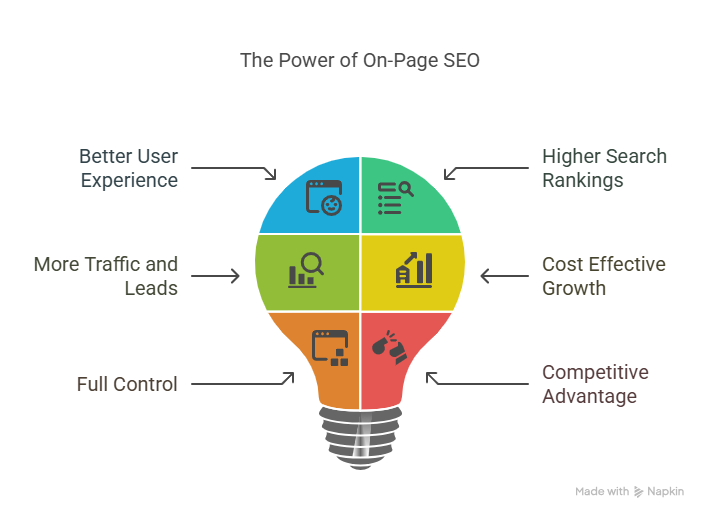
On-Page Optimization Tips for Pages That Earn Traffic but Few Leads
A page that earns traffic but produces few leads is not necessarily failing. It may already have strong visibility, but the content, structure, or user experience may not be guiding visitors toward action. On-page optimization can help turn existing traffic into better engagement and more meaningful outcomes.
Confirm the Page Matches User Intent
The first step is to understand why users are arriving. A page may rank for informational queries even though the business expects it to generate leads. If visitors are looking for education, but the page pushes too quickly toward conversion, they may leave. If they are ready to act, but the page provides too much background, they may also lose interest.
Review search queries, engagement behavior, and conversion paths to determine whether the page matches user expectations.
This supports strategic SEO services because traffic only creates value when the page meets the visitor’s actual need.
Improve the Opening Section
The introduction should confirm relevance quickly. Visitors need to understand what the page covers, why it matters, and what they can do next. If the opening is vague or too long, users may leave before reaching the most persuasive information.
A stronger opening should:
Address the main user concern
Explain the value of the page
Set expectations clearly
Lead naturally into the next section
Small improvements to the first screen can often create better engagement.
Make Calls to Action Easier to Find
Some pages earn traffic but fail to generate leads because the next step is unclear. A call to action should be visible, relevant, and aligned with the page content. It should not feel disconnected from the information the visitor just read.
Effective calls to action may invite users to:
Request a consultation
Explore a service page
Download a resource
Contact the team
Read a related guide
This type of guidance supports professional search engine optimization support because it helps turn visibility into measurable action.
Strengthen Internal Links
Internal links can help visitors move from education to evaluation. If a blog post explains a problem, it should guide readers toward related resources or services that help solve it. Without internal links, users may leave after reading because no clear path is provided.
Good internal links use natural anchor text and appear where they add value. They should help readers understand what they will find next.
Improve Readability and Page Flow
A page may contain useful information but still fail to convert if the reading experience is difficult. Dense paragraphs, unclear headings, or sudden topic shifts can cause visitors to disengage before reaching conversion points.
Improvements may include:
Shortening long paragraphs
Rewriting vague headings
Moving key information higher
Adding bullets for important points
Removing repeated ideas
Creating smoother transitions
These changes can make the page feel more useful without changing the topic.
Add Trust-Building Details
Lead-focused pages often need reassurance. Visitors may want to know why the business is credible, what process they can expect, or how the service helps solve their problem. Adding trust-building details can improve confidence.
Examples include:
Clear service explanations
Case examples or use cases
FAQs
Testimonials, when available
Relevant statistics or outcomes
Transparent process descriptions
These details should support the reader’s decision rather than overwhelm the page.
Connect Optimization With Measurement
After making updates, performance should be reviewed over time. Engagement time, internal link clicks, form submissions, calls, and conversion rates can show whether the changes are helping.
This approach supports digital marketing SEO strategy because it connects content updates with measurable business outcomes.
A practical review may compare performance before and after changes to see whether users are staying longer, exploring more pages, or completing more actions.
Turn Existing Traffic Into Better Results
Pages that earn traffic already have a valuable starting point. The opportunity is to improve what happens after users arrive. By aligning content with intent, strengthening calls to action, improving readability, and guiding users through internal links, businesses can make existing visibility more productive.
On-page optimization helps ensure that traffic does not stop at awareness. It creates a clearer path from interest to engagement, helping more visitors take the next step with confidence.
If your pages are earning traffic but not enough leads, explore professional search engine optimization support or speak with an expert to improve conversion paths.

How Clear Content Structure Helps Visitors Compare Their Options
Many visitors arrive on a website because they are comparing choices. They may be evaluating services, providers, strategies, or next steps. Clear content structure helps them understand those options without confusion. When information is organized logically, visitors can compare more easily, build confidence, and move closer to action.
Help Visitors Understand the Decision
Comparison-focused visitors usually need more than a basic explanation. They want to understand differences, advantages, limitations, and practical considerations. If a page presents information in a scattered way, users may struggle to evaluate their options and leave to continue researching elsewhere.
A strong structure helps frame the decision clearly. It explains what matters, why it matters, and how users can think through the choice.
This supports search engine optimization strategy because pages that satisfy user intent are more likely to hold attention and support meaningful engagement.
Use Headings That Clarify the Path
Headings should guide users through the comparison. Instead of broad labels, each heading should explain what the section helps the reader understand.
Examples of helpful headings include:
What makes these options different?
When does each approach make sense?
What should businesses consider before choosing?
How can performance be measured?
These headings make the page easier to scan and help readers find the sections most relevant to their decision.
Present Information in Manageable Sections
Comparison content can become overwhelming when too many ideas appear at once. Breaking information into focused sections helps visitors evaluate one factor at a time.
Useful comparison factors may include:
Cost or investment level
Timeline or complexity
Business goals
Expected outcomes
Required resources
Long-term maintenance
Shorter sections make the content easier to process and reduce the friction that often comes with complex decision-making.
Keep the Language Clear and Practical
Visitors comparing options often need practical guidance, not overly technical explanations. Clear language helps them understand the real differences between choices without getting lost in jargon.
This does not mean simplifying the topic too much. It means explaining ideas in a way that supports decision-making. Strong content gives readers enough detail to feel informed while keeping the structure easy to follow.
This approach aligns with professional SEO services because readability and intent alignment help improve user experience after the click.
Use Lists or Tables When Helpful
Structured elements can make comparisons easier. Lists work well when outlining considerations, while tables can help users quickly compare features or differences. These elements should be used when they genuinely improve clarity.
A page might include a simple comparison of:
Short-term versus long-term strategies
In-house versus agency support
Technical updates versus content updates
Local SEO versus broader organic SEO
The goal is to help users see differences quickly before reading deeper explanations.
Guide Users Toward the Next Step
Comparison content should not end without direction. Once visitors understand their options, they need a clear path forward. Internal links can guide them to related resources, service pages, or deeper explanations based on what they are ready to explore next.
This supports SEO and digital marketing planning by connecting educational content with the broader customer journey.
For example, a comparison article may link to resources about analytics, content optimization, technical SEO, or local search strategy. These links help users continue learning without feeling pushed.
Use Analytics to Improve Comparison Pages
Analytics can show whether comparison pages are helping users make decisions. Strong engagement time and internal link clicks may suggest that visitors find the content useful. High exits or low scroll depth may indicate that the structure is unclear or the most important information appears too late.
Useful metrics include:
Time on page
Scroll depth
Clicks to related pages
Conversion actions
Exit points
Search queries leading to the page
These signals help refine the page over time.
Make Decisions Easier for Readers
Clear content structure helps visitors compare options with less effort. By organizing information around real decision factors, using practical language, and guiding users toward next steps, businesses can create pages that support trust and engagement.
In competitive digital environments, comparison-focused content can be especially valuable. It helps users move from uncertainty to clarity, giving them the confidence to keep exploring and eventually take action.
Make your content easier for visitors to understand, compare, and act on. Learn more about SEO and digital marketing planning or speak with an expert.

Using Local SEO Analytics to Prioritize Website and Listing Updates
Local SEO analytics can reveal where a business is visible, how users interact with listings, and whether those interactions lead to meaningful actions. The challenge is turning that information into practical updates. When reviewed carefully, local data can help prioritize improvements to business profiles, website pages, content, and conversion paths.
Start With the Right Signals
Local SEO reporting often includes many metrics, but not all of them guide decisions equally. Rankings and impressions provide visibility context, while calls, clicks, direction requests, and form submissions show whether users are taking action.
A useful reporting view includes:
Local search impressions
Website clicks from listings
Calls and messages
Direction requests
Visits to service or location pages
Conversion actions
This kind of tracking supports strategic SEO services because it connects local visibility with user behavior.
Identify Listing Issues First
Local listings often create the first impression. If a business has strong impressions but low engagement, the listing may not be persuasive enough. Users may need clearer descriptions, better photos, updated hours, stronger categories, or more recent reviews before they feel ready to click or call.
Analytics can help identify where listing updates may be needed. For example, low calls despite strong visibility may suggest that contact information, service descriptions, or trust signals need improvement.
Useful listing updates may include:
Refreshing business descriptions
Updating service categories
Adding recent photos
Improving review response consistency
Confirming hours and contact details
These changes can help turn visibility into action.
Review Website Behavior After Listing Clicks
Website clicks from local listings show that users want more information. Once they arrive, website analytics can reveal whether the page supports their intent. If users leave quickly, the landing page may not match what the listing promised.
For example, a local listing may highlight a specific service, but the linked page may provide only general information. That mismatch can reduce engagement and conversions.
Improving landing pages supports professional search engine optimization services by helping users find relevant details faster.
Prioritize Pages With Visibility but Weak Engagement
Some pages already appear in search but fail to hold attention. These pages are often strong candidates for updates because they have search potential but need better structure or messaging.
Potential improvements include:
Rewriting introductions for faster clarity
Adding clearer headings
Shortening dense paragraphs
Improving internal links
Adding FAQs for common questions
Strengthening calls to action
These updates can improve user experience without requiring a full website rebuild.
Compare Performance by Location or Service
For businesses with multiple locations or service areas, analytics can show where updates should happen first. One location may have strong listing engagement but weak website conversions. Another may have low visibility but high conversion quality once users arrive.
This comparison helps teams prioritize work based on opportunity. Instead of updating every page at once, businesses can focus on the locations or services where improvements are most likely to make a difference.
This approach connects local reporting with digital marketing SEO strategy by using data to guide investment.
Track Changes Over Time
Updates should be measured after they are made. If a listing description is improved, call volume and website clicks should be reviewed over the following weeks or months. If a location page is refreshed, engagement and conversions should be monitored.
Keeping notes beside reporting data helps explain changes. Without context, it may be difficult to understand whether performance shifted because of an update, seasonality, or another factor.
Turn Analytics Into a Practical Workflow
A simple workflow can help businesses make local SEO updates more consistently:
Review visibility, engagement, and conversion data.
Identify listings or pages with clear gaps.
Make focused updates based on user behavior.
Track performance after changes.
Repeat the process regularly.
This keeps local SEO from becoming a one-time project.
Make Local Data Useful
Local SEO analytics are most valuable when they guide action. Calls, clicks, visits, and conversions can show where users are interested, where they hesitate, and where the experience needs improvement.
By using analytics to prioritize website and listing updates, businesses can focus their time where it matters most. Over time, this creates a stronger local presence that is easier to find, easier to trust, and easier for customers to act on.
Turn local SEO data into smarter updates for your website and listings. Explore professional search engine optimization services or speak with an expert.
How Local Business Schema Helps Search Engines Understand Service Areas
Local businesses often need to communicate both what they do and where they do it. Without clear signals, search engines may struggle to understand which services apply to which locations. Local business schema helps organize that information in a structured format, making it easier for search systems to interpret service areas, business details, and local relevance.
Define the Business Clearly
LocalBusiness schema gives search engines a structured version of essential business information. This can include the company name, address, phone number, hours, website, and service details. When this information matches the visible page content, it creates stronger consistency across the website.
For businesses investing in local search engine optimization services, this clarity can support better local visibility because search systems receive more precise information about the business.
Connect Services to Locations
Service-area businesses often operate across several cities, neighborhoods, or regions. Schema can help connect services to those areas when it is implemented accurately. For example, a service page can use structured data to identify the offering, the provider, and the area served.
This is especially useful when a business has multiple service pages or location pages. Each page should communicate a clear purpose, and the schema should support that same message.
Important details may include:
Service name
Provider information
Service area
Contact details
Relevant location information
When these details are consistent, search engines can better understand which page should appear for specific local queries.
Align Schema With Visible Content
Schema should never claim information that is not supported on the page. If a service area, offering, review, or business detail appears in structured data, it should also be clear to users. This alignment helps reduce confusion and supports trust.
For example, if a page discusses services in a specific city, the visible content should mention that city naturally. The schema can then reinforce the same local signal in a machine-readable format.
This approach supports professional SEO solutions because it combines technical clarity with user-facing accuracy.
Use Supporting Schema Types When Helpful
LocalBusiness schema is often only one part of a structured data strategy. Other schema types can help clarify how pages connect and what users can expect.
Helpful schema types may include:
Service schema for service-specific pages
BreadcrumbList schema for site structure
FAQPage schema when visible FAQs are present
Organization schema for broader business identity
These elements help search engines interpret the website more confidently.
Support AI-Driven Local Discovery
AI-driven search tools depend on clear signals when summarizing businesses and recommending local options. Structured data can help these systems understand the relationship between a business, its services, and its service areas.
This does not guarantee inclusion in AI-generated answers, but it strengthens the foundation. A clear, accurate schema setup makes information easier to parse and reduces ambiguity.
For businesses focused on SEO and digital marketing strategy, schema can help connect technical SEO with content quality and local visibility.
Review Schema as Service Areas Change
Service areas may change as a business grows or refines its market focus. If the website is updated but schema is not, search engines may receive outdated information. Regular reviews help keep structured data accurate.
A simple review process may include:
Checking service area details quarterly
Updating schema after new location pages are added
Testing structured data after website changes
Confirming that schema matches visible copy
Monitoring Search Console for errors or warnings
This maintenance keeps local signals reliable.
Build Local Visibility Through Clear Data
Local business schema helps search engines understand what a company offers and where those services are available. It is not a replacement for strong content, reviews, or local authority, but it gives those elements a clearer technical foundation.
By aligning schema with visible content, connecting services to locations, and maintaining accurate details over time, businesses can strengthen local search clarity and support a more dependable presence across traditional and AI-driven discovery experiences.
Need help improving how search engines understand your services and locations? Review SEO and digital marketing strategy or speak with an expert.

Why Off-Page SEO Reporting Should Include Brand and Referral Insights
Off-page SEO is often measured through backlinks, but backlinks alone do not show the full impact of authority-building work. Brand mentions, referral traffic, direct visits, and engagement patterns can all reveal whether off-page activity is strengthening visibility in a meaningful way. A stronger reporting approach looks beyond link totals and connects external signals to real business outcomes.
Look Beyond Backlink Volume
Backlinks remain important, but the number of links is only one part of the story. A smaller number of high-quality links from relevant sources can be more valuable than a large number of weak or unrelated links. The source, context, audience, and page destination all matter.
Businesses should evaluate:
The authority of the referring site
The relevance of the linking page
Whether the link points to a strategic resource
Whether visitors from that source engage after clicking
This type of analysis supports search engine optimization services by focusing on value rather than surface-level activity.
Include Brand Mentions in Reporting
Not every off-page signal includes a clickable link. A business may be mentioned in an article, directory, podcast, social conversation, or industry roundup without receiving a backlink. These mentions still matter because they can improve awareness and reinforce credibility.
Brand mentions may lead users to search for the company later, visit the website directly, or remember the business during a future decision. Tracking these references gives teams a broader view of how often the brand appears across the web and in what context.
For businesses focused on SEO strategy and visibility growth, brand mentions help show whether authority is developing beyond the website.
Measure Referral Traffic Quality
Referral traffic helps explain whether external placements are attracting the right audience. A link that sends only a few visitors can still be valuable if those visitors spend time on the site, view multiple pages, or complete a conversion action.
Useful referral metrics include:
Engagement time
Pages viewed per session
Conversion actions
Repeat visits
Bounce or exit behavior
This data helps businesses identify which publications, directories, or partnerships are worth expanding.
Watch Branded Search Trends
Off-page visibility can influence how people search. If more users search for a business by name after guest posts, media mentions, or digital PR campaigns, that may indicate stronger awareness. Branded search growth can be a useful sign that external visibility is turning into active interest.
These patterns are especially important in competitive markets. Users often encounter a brand multiple times before deciding to visit the website or make contact. Off-page reporting should account for that longer path.
Connect Off-Page Signals to Priority Pages
Effective off-page SEO should support important pages, not only the homepage. Links and mentions that reinforce key services, resources, or thought leadership topics can help strengthen topical authority.
A reporting review should ask:
Are strategic service pages earning external support?
Which content assets attract the best referrals?
Are external mentions aligned with core business topics?
Are campaigns helping users discover deeper resources?
This connects off-page work with digital marketing SEO planning and ensures that outreach supports larger business goals.
Build a Repeatable Reporting Framework
A useful off-page report should be consistent and easy to review over time. Instead of presenting too many disconnected numbers, focus on a small group of signals that explain progress.
A simple framework may include:
New relevant referring domains
High-quality backlinks earned
Brand mentions and citations
Referral traffic and engagement
Branded search trends
Ranking changes for linked pages
This structure helps teams see whether off-page SEO is building momentum.
Turn External Visibility Into Action
Off-page SEO reporting should answer more than “how many links did we earn?” It should show whether external visibility is improving awareness, sending qualified traffic, and supporting the pages that matter most.
By including brand and referral insights, businesses gain a clearer view of authority-building work. Over time, this helps refine outreach, strengthen digital PR, and build a more reliable foundation for organic growth.
Want clearer insight into how authority, links, and referral traffic support growth? Learn more about search engine optimization services or speak with an expert.

How Social Sharing Signals Support Content Visibility Across Channels
Social sharing features do more than help visitors post a link. When they are planned carefully, they can extend the life of content, introduce helpful resources to new audiences, and create signals that support broader visibility across search, social, and referral channels. For businesses investing in content, social sharing helps each article work harder after publication.
Make Distribution Easier for Readers
People are more likely to share content when the process is simple. If a visitor has to copy a URL, open a platform manually, and write their own post, the added effort can reduce sharing. Clear sharing buttons remove that friction and make it easier for readers to pass along something they find useful.
This is especially important for educational content. Guides, checklists, and strategy articles often answer questions that other people in a reader’s network may also have. When sharing tools are easy to find, content can reach users who may not have discovered it through search alone.
This supports strategic SEO services because content distribution can reinforce visibility beyond the website itself.
Improve How Shared Links Appear
The appearance of a shared link can influence whether someone clicks. A clear title, useful description, and properly sized image help users understand the value of the content before they visit the page. If the preview looks incomplete or confusing, users may ignore it, even if the content itself is strong.
Important elements include:
A title that clearly explains the topic
A description that highlights the benefit
A preview image that fits the platform
Consistent branding that feels professional
When shared links look polished, they create a stronger first impression and encourage more qualified traffic.
Connect Social Sharing With Content Strategy
Social sharing should not be treated as an isolated feature. It works best when it is connected to the purpose of the content. An introductory blog may be designed for broad awareness, while a deeper guide may support evaluation and trust-building. Each type of content needs sharing features that match how users engage with it.
For example, long-form articles may benefit from floating share buttons or share prompts after key sections. Shorter posts may only need clear buttons at the top and bottom. The goal is to make sharing feel natural instead of disruptive.
This approach aligns with professional search engine optimization support because it connects content structure, visibility, and user behavior.
Track What Shared Content Does Next
Social sharing becomes more valuable when it is measured. Referral traffic, engagement time, page views, and conversion actions can show whether shared links are bringing in the right audience. These metrics help teams understand which topics are worth expanding and which platforms generate stronger engagement.
A practical review may look at:
Which articles earn the most shares
Which platforms send engaged visitors
Whether shared visitors explore additional pages
Whether social traffic contributes to leads or inquiries
This reporting helps businesses improve future content and distribution decisions.
Support a More Connected Digital Presence
Search, content, and social activity often perform better when they support one another. A strong article may earn search visibility, gain social shares, attract referral traffic, and create opportunities for other websites to reference it. Each channel strengthens the others when the content is useful and easy to distribute.
This is why social sharing belongs within comprehensive SEO and digital marketing strategy rather than being added only after content is published.
Turn Useful Content Into a Wider Asset
Social sharing features help businesses get more value from the content they already create. By reducing friction, improving previews, and measuring performance, organizations can extend reach without relying only on new content production or paid promotion.
When social sharing is integrated thoughtfully, each piece of content has more opportunities to reach the right audience, generate engagement, and support long-term visibility across digital channels.
Ready to make your content easier to find, share, and measure? Explore strategic SEO services or speak with an expert to strengthen your digital visibility.

Updating Older Content to Match Current Search Expectations
Older content can still attract traffic, but it may not always meet current search expectations. Search behavior changes, AI-driven results reshape how information is presented, and users often expect clearer answers, better structure, and more practical guidance than they did when the content was first published. Updating older content helps preserve its value while making it more useful for today’s readers.
Start by Reviewing Search Intent
Before editing an older page, review what users are trying to accomplish when they find it. A page that once matched a simple keyword may now need to answer broader or more specific questions. Search results may show that users expect comparisons, examples, steps, FAQs, or more direct explanations.
A practical review may include:
Checking which queries currently bring traffic
Comparing the page with current search results
Identifying questions the page does not answer
Reviewing whether the opening section provides clarity quickly
Looking for outdated wording, examples, or assumptions
This process supports strategic search engine optimization services because it keeps existing content aligned with real user intent instead of relying on past performance alone.
Improve the Opening for Faster Clarity
The introduction of an older article often needs the most attention. If the opening takes too long to explain the topic or uses outdated framing, users may leave before reaching the useful information. Today’s visitors usually expect a clear answer early, followed by supporting details.
A stronger opening should confirm what the page covers, explain why it matters, and help the reader understand what they will learn. This does not require oversimplifying the topic. It simply makes the page easier to evaluate within the first few seconds.
Clearer introductions also support professional SEO strategy and support because they improve the user experience after someone clicks from search, social, or referral sources.
Refresh Headings and Page Structure
Headings help readers scan the page and help search systems understand how the content is organized. Older content may have headings that are too general, too clever, or not aligned with current user questions.
Updating headings can make the article easier to navigate without rewriting the entire page. Strong headings should:
Summarize the section clearly
Reflect the questions users are likely asking
Follow a logical order
Break complex ideas into manageable parts
Make the page easier to scan on mobile devices
Better structure can make existing information feel more useful and accessible.
Add Depth Where the Page Feels Thin
Some older content underperforms because it no longer provides enough detail. A short article may have been acceptable when competition was lower, but current search results may reward pages that explain the topic more completely.
Useful additions may include:
Practical examples
Step-by-step guidance
Common mistakes or warning signs
Updated terminology
Brief FAQs
Internal links to related resources
The goal is not to make the page longer for its own sake. It is to add meaningful depth that helps the reader understand the topic more fully.
Remove or Tighten Outdated Sections
Updating content is not only about adding new material. Some older pages contain sections that repeat the same point, include outdated examples, or no longer support the page’s main purpose. Removing unnecessary content can improve readability and keep the page focused.
Content may need to be revised if it:
Uses outdated references
Repeats similar ideas in several places
Includes information that no longer reflects current services
Delays the main answer
Feels too dense or difficult to scan
This kind of cleanup supports comprehensive SEO planning and execution by improving both content quality and user experience.
Strengthen Internal Links
Older content may not reflect newer resources added to the website. Updating internal links helps users continue their journey and helps search engines understand how topics connect across the site.
For example, an older article about content optimization may now link to newer resources about AI search, structured data, analytics, local SEO, or user experience. These links make the page more useful and help distribute attention to important supporting content.
Anchor text should be natural and descriptive. It should help users understand what they will find if they click, rather than forcing exact-match phrases into the copy.
Use Performance Data to Guide Updates
Analytics can help determine which older pages should be updated first. Pages with impressions but declining clicks may need better titles, meta descriptions, or opening sections. Pages with traffic but weak engagement may need better structure, stronger internal links, or clearer next steps.
Useful signals include:
Organic impressions and click-through rates
Engagement time
Scroll depth
Exit behavior
Internal link clicks
Conversion actions
Keyword movement over time
This data helps prioritize updates that are most likely to improve performance.
Keep Older Content Working Longer
Older content can remain valuable when it is maintained carefully. A page that already has history, visibility, or backlinks may not need to be replaced. It may simply need a stronger structure, updated examples, better internal links, and clearer alignment with current search expectations.
Refreshing On-Page Content to Maintain Search Relevance
On-page content can lose effectiveness over time, even if it performed well when first published. Search behavior changes, competitors update their pages, services evolve, and user expectations shift. Refreshing on-page content helps ensure that important pages remain accurate, useful, and aligned with how people search today.
Why Content Refreshes Matter
A page does not need to be outdated to become less relevant. Sometimes the main topic is still valuable, but the structure, examples, headings, or internal links no longer match current user intent. When this happens, visitors may leave quickly or fail to take the next step.
Refreshing content helps preserve the value of existing pages while improving how they serve users. For businesses investing in strategic search engine optimization services, content refreshes are an important part of maintaining visibility without always creating new pages from scratch.
Review Search Intent First
Before updating a page, start by reviewing what users are trying to accomplish. The keywords that originally brought traffic may no longer reflect the full range of questions people ask. Search results may also show that users now expect more detailed explanations, comparisons, examples, or quick answers.
A practical review should ask:
Does the page still answer the main search intent?
Are users looking for a faster answer or more depth?
Have competitors added stronger examples or clearer structure?
Does the page reflect current services, tools, or terminology?
This step helps ensure that updates are based on user needs rather than cosmetic edits alone.
Strengthen Headings and Page Structure
Headings guide both readers and search engines through the page. If headings are vague or outdated, users may struggle to understand the content quickly. Refreshing headings can make the page easier to scan and help each section communicate its purpose more clearly.
Strong headings should describe the section directly, follow a logical order, and reflect the questions users are likely asking. This supports professional SEO strategy and support because better structure improves readability, engagement, and search interpretation.
Shorter paragraphs can also improve the page experience. Long blocks of text may have worked in the past, but modern readers often scan first, especially on mobile devices. Breaking dense sections into focused paragraphs can make the same information feel more accessible.
Update Examples, Data, and Messaging
Older content often includes examples or language that no longer feels current. Updating these details helps maintain trust and shows that the page is actively maintained. This is especially important for topics affected by changes in search behavior, AI-driven results, analytics platforms, or digital marketing tools.
Content updates may include:
Replacing outdated examples
Clarifying service descriptions
Adding newer user questions
Updating screenshots or references when needed
Removing claims that are no longer accurate
Rewriting sections that feel too broad or repetitive
These improvements help the page feel more useful without requiring a full rewrite.
Improve Internal Links
Internal links are an important part of on-page optimization. As new blog posts, service pages, or resources are added, older pages may need updated links to help users continue their journey. A refreshed page should guide visitors toward the most relevant next steps.
For example, an article about content optimization may link to related resources on analytics, structured data, local SEO, or broader SEO planning. These connections support comprehensive SEO planning and execution by helping users and search systems understand how different topics fit together.
Remove Content That No Longer Adds Value
Refreshing on-page content is not only about adding more. It may also involve removing or tightening sections that no longer support the page’s purpose. Content bloat can make a page harder to use and may weaken engagement.
Sections may need to be shortened if they:
Repeat the same point several times
Answer questions users are no longer asking
Include unrelated background information
Delay the main answer
Make the page feel harder to scan
The goal is to make the page more useful, not simply longer.
Use Performance Data to Prioritize Updates
Not every page needs immediate attention. Analytics can help identify which pages should be refreshed first. Pages with strong impressions but declining clicks may need better titles or meta descriptions. Pages with traffic but weak engagement may need clearer structure, stronger openings, or better internal links.
Useful signals to review include:
Organic impressions and clicks
Engagement time
Bounce or exit patterns
Scroll depth
Internal link clicks
Conversion actions
Keyword movement over time
This data helps turn content refreshes into a strategic process instead of guesswork.
Keep Content Relevant Over Time
Refreshing on-page content helps businesses protect and improve the value of existing pages. Instead of allowing important content to become stale, regular updates keep pages aligned with search intent, user expectations, and current business priorities.
By reviewing intent, improving structure, updating examples, refining internal links, and removing unnecessary content, businesses can make existing pages work harder. Over time, this ongoing maintenance supports stronger engagement, clearer communication, and more sustainable search visibility.

How to Build SEO Resource Pages That Are Easy to Read and Useful for Visitors
Resource pages can be valuable tools for search visibility, user education, and lead generation. When they are planned well, they help visitors understand a topic in depth while guiding them toward related services or next steps. However, a resource page that feels too dense, disorganized, or difficult to scan can lose readers before they reach the most useful information.
The goal is to create a page that is both comprehensive and easy to use. Strong resource pages provide enough detail to answer important questions, but they also organize that information in a way that feels clear, practical, and accessible.
Start With the User’s Main Question
Every effective resource page should begin with a clear understanding of what the visitor wants to learn. Some users may need a basic explanation, while others may be comparing options or looking for a deeper strategy. If the page tries to cover too many ideas without a clear focus, it can quickly feel overwhelming.
Before creating the page, it helps to define:
What problem the visitor is trying to solve
What information they need first
Which related questions they may ask next
What action or next step the page should support
This kind of planning supports strategic search engine optimization services because the page is built around real intent rather than a broad topic alone.
Use Headings That Guide the Reader
Headings help visitors decide where to focus their attention. A well-structured resource page should allow someone to scan the headings and still understand the flow of the content. Each section should answer a specific question or explain one important part of the topic.
For example, instead of using vague headings like “Overview” or “More Details,” stronger headings might explain what the section actually covers. This makes the page easier to navigate and helps readers find the information they need faster.
Clear headings also support search engines by showing how the page is organized and which subtopics are included.
Keep Paragraphs Short and Focused
Long paragraphs can make a resource page harder to read, especially on mobile devices. Even when the information is helpful, dense formatting can create friction and cause users to leave early.
A better approach is to keep each paragraph focused on one main idea. Shorter sections make the content easier to scan and help visitors move through the page without feeling overwhelmed.
This also supports professional SEO strategy and support because readability affects how users engage after they arrive from search, social media, or referral links.
Add Helpful Lists When They Improve Clarity
Lists are useful when readers need to compare ideas, follow steps, or review key points quickly. They can make complex information easier to understand without removing important detail.
Lists work especially well for:
Step-by-step processes
Common mistakes
Important metrics
Benefits or considerations
Questions to ask before making a decision
However, lists should not replace explanation entirely. The strongest resource pages use a mix of short paragraphs, lists, and practical examples so the content feels both helpful and complete.
Provide Depth Without Adding Unnecessary Content
A resource page should be detailed enough to satisfy the visitor’s search intent, but it should not include filler. Content bloat happens when a page repeats the same point, includes unrelated background, or adds sections that do not help the reader move forward.
Useful depth usually includes:
Clear explanations of important concepts
Examples that show how ideas apply
Answers to common follow-up questions
Comparisons that help users evaluate options
Internal links to related resources
This balance supports comprehensive SEO planning and execution because the page becomes useful for both readers and search engines without becoming difficult to navigate.
Use Internal Links to Support the Next Step
A resource page does not need to answer every possible question on one page. Internal links can guide readers to related articles, service pages, or deeper educational resources. This helps keep the main page focused while still giving visitors a path to continue learning.
For example, a resource page about SEO strategy may link naturally to content about technical SEO, local SEO, analytics, structured data, or content optimization. These links help users explore the topic at their own pace and help search engines understand how different pages connect.
Review Performance and Improve Over Time
Analytics can show whether a resource page is working. If visitors leave quickly, stop scrolling early, or do not click related links, the page may need clearer headings, shorter sections, or stronger next steps.
Useful signals to review include:
Engagement time
Scroll depth
Internal link clicks
Conversion actions
Search queries leading to the page
Mobile and desktop behavior
These insights help businesses improve resource pages based on real user behavior rather than assumptions.
Build Resource Pages That Support Long-Term SEO Value
The best resource pages are not just long. They are useful, organized, and easy to navigate. They answer the visitor’s main question, provide enough depth to build trust, and guide readers toward related information when they are ready for more detail.
By combining clear structure, focused writing, helpful lists, and natural internal links, businesses can create resource pages that support both user experience and search visibility. Over time, these pages can become valuable assets that attract traffic, build authority, and help visitors make more informed decisions.

Evaluating Long-Term Trends in Local SEO Performance
Local SEO performance can shift from month to month, but short-term changes do not always tell the full story. A temporary increase in calls, a dip in impressions, or a ranking movement may reflect seasonality, search behavior, or recent updates rather than a lasting trend. Evaluating long-term performance helps businesses understand whether their local SEO efforts are building sustainable visibility, engagement, and customer action over time.
Look Beyond Monthly Fluctuations
Monthly reports are useful, but they can sometimes overemphasize small changes. Local search activity may rise or fall because of holidays, weather, local events, or changes in customer demand. Looking at performance across several months or quarters helps separate normal variation from meaningful progress.
For businesses investing in strategic search engine optimization services, this long-term view is important. It shows whether local visibility is becoming more stable, whether engagement is improving, and whether search activity is turning into real business outcomes.
Review Visibility, Engagement, and Conversions Together
A strong local SEO review should not focus on rankings alone. Visibility matters, but it only becomes valuable when users take action. Long-term analysis should combine three major areas:
Visibility metrics, such as impressions, rankings, and local pack presence
Engagement metrics, such as calls, clicks, direction requests, and messages
Conversion metrics, such as form submissions, appointments, bookings, or visits
When these metrics are reviewed together, patterns become easier to understand. For example, rising impressions with flat engagement may suggest that listings need stronger messaging. Increasing calls and website clicks may indicate that local visibility is reaching the right audience.
Compare Performance by Location or Service Area
For multi-location or service-area businesses, performance may vary significantly by market. One location may show steady call growth, while another may struggle to turn impressions into action. Reviewing trends by location helps identify where local SEO is strongest and where additional work is needed.
This type of analysis may reveal:
Locations with strong visibility but weak conversions
Service areas gaining traction over time
Markets where competitors may be more active
Pages that need better local content or internal links
These insights support professional SEO strategy and support because they help businesses prioritize resources based on actual performance rather than assumptions.
Add Context to the Data
Long-term trends are easier to interpret when reports include context. If a business updates Google Business Profile information, adds location content, earns new reviews, improves schema, or launches a campaign, those changes should be noted alongside performance data.
Without context, it can be difficult to explain why results changed. With context, teams can connect specific actions to possible outcomes and make better decisions in future campaigns.
Helpful context may include:
Website updates or new local pages
Review growth or reputation changes
Business profile optimizations
Seasonal demand patterns
Local promotions or campaigns
Competitor activity in priority markets
Watch for Signs of Sustainable Growth
Sustainable local SEO growth is usually gradual. It may show up as steady improvements in branded searches, more consistent calls, stronger engagement with service pages, or increased visibility across multiple local queries.
Positive long-term signals may include:
More users discovering the business through nonbranded searches
Growth in calls or direction requests over several months
Higher engagement on location and service pages
Increased conversions from local traffic
Stronger performance across multiple service areas
These patterns matter because they show that local SEO is supporting a more dependable path from discovery to action.
Use Trends to Guide Investment
Long-term reporting should help businesses decide where to invest next. If one location is growing quickly, it may benefit from additional content or paid support. If another location has visibility but low engagement, profile updates or review-building may be more important. If service pages attract traffic but do not convert, on-page improvements may be needed.
This approach supports comprehensive SEO planning and execution by connecting local SEO data with content, technical optimization, user experience, and conversion strategy.
Avoid Overreacting to One Data Point
One of the main benefits of long-term analysis is perspective. A single month of lower calls does not always mean the strategy is failing. A sudden increase in impressions does not always mean the campaign is succeeding. Trends become more reliable when they are supported by repeated patterns over time.
Businesses should look for consistent movement across related metrics rather than relying on one number. This makes reporting more accurate and helps prevent reactive decisions that may disrupt a strategy before it has time to mature.
Build a Clearer View of Local Performance
Evaluating long-term local SEO trends helps businesses understand what is really happening beneath the surface. Instead of reacting to every short-term change, they can identify patterns, connect actions with outcomes, and make more informed decisions about future investment.
Over time, this creates a more strategic approach to local visibility. When businesses review performance consistently and interpret the data in context, local SEO becomes less about chasing rankings and more about building a reliable system for discovery, engagement, and growth.

Maintaining Accurate Schema as Services and Locations Change
Schema markup helps search engines understand who a business is, what it offers, and where it operates. However, structured data only supports visibility when it stays accurate. As services evolve, locations change, hours shift, or new pages are added, schema needs to be reviewed and updated so search systems continue receiving clear and reliable information.
Why Schema Accuracy Matters
Schema gives search engines a structured version of important business details. This may include service names, business information, locations, service areas, contact details, hours, reviews, and page relationships. When this information matches the visible content on the page, it helps reduce confusion and supports stronger search interpretation.
For businesses investing in strategic search engine optimization services, accurate schema is part of the technical foundation that helps pages qualify for richer results, local visibility, and AI-readable summaries. Inaccurate schema can weaken that foundation by sending mixed signals about what the business actually offers.
Review Schema When Services Change
Businesses often update their services over time. They may add new offerings, remove outdated ones, rename services, or adjust how they describe solutions. When these changes appear on the website, the related schema should be updated as well.
Service schema should reflect what is currently shown on the page. If a page now focuses on a new or expanded service, the structured data should not continue describing an older version of the offering. This alignment is especially important for businesses with multiple service pages, where each page should communicate a specific and accurate topic.
Reference content on schema markup emphasizes that structured data works best when it lines up with the visible content and describes services, locations, and business details in a machine-readable way.
Keep Location Details Consistent
Location information is one of the most important areas to maintain carefully. Addresses, phone numbers, hours, service areas, and location names should remain consistent across website content, schema, local listings, and business profiles.
Inconsistent location details can create confusion for users and search systems. For example, if a location page lists one service area but the schema describes a different one, search engines may have less confidence in how to match that page with local queries.
This consistency supports professional SEO strategy and support, especially for local and multi-location businesses competing for visibility in specific markets.
Update Schema After Website Changes
Schema maintenance should be part of any website update process. A redesign, page consolidation, content refresh, or URL change can all affect structured data. If schema is overlooked, pages may contain outdated markup or missing relationships.
A practical review should ask:
Does the schema match the current page topic?
Are service names and descriptions accurate?
Are locations, hours, and contact details current?
Are breadcrumbs and page relationships still correct?
Are FAQ or review elements still visible and eligible?
These checks help prevent structured data from becoming stale as the website evolves.
Support AI-Driven Search With Clear Signals
AI-driven search systems rely on clear and consistent information when summarizing businesses, services, and locations. Accurate schema helps AI tools interpret what a page represents and how it connects to the wider website.
This does not guarantee inclusion in AI-generated results, but it does make the page easier to understand. For service businesses, that clarity can be valuable when users ask conversational questions about providers, locations, or specific solutions.
Maintaining schema accuracy supports comprehensive SEO planning and execution because it connects technical SEO, content accuracy, and user experience into one reliable structure.
Test Structured Data Regularly
Schema should be tested after implementation and reviewed periodically. Validation tools can identify errors, warnings, or missing required fields. Search Console can also help surface structured data issues that may affect performance or eligibility for enhanced results.
A simple maintenance rhythm may include:
Testing schema after major content updates
Reviewing core service pages quarterly
Checking location pages after business profile changes
Updating schema when services are added or removed
Monitoring structured data reports for errors
This process helps businesses catch issues before they become long-term visibility problems.
Avoid Overstating Information in Markup
Structured data should not be used to claim services, locations, reviews, or details that are not clearly supported on the page. Overstated schema can create trust issues and may reduce the reliability of the information search systems receive.
The safest approach is to treat schema as a structured reflection of visible content. If a detail is important enough to include in markup, it should usually be clear to users on the page as well.
Build Long-Term Search Clarity
Schema accuracy is not a one-time technical task. It is an ongoing part of maintaining a reliable digital presence. As businesses grow and websites change, structured data should evolve with them.
By keeping schema aligned with current services, locations, and page content, businesses help search engines and AI systems interpret their information more confidently. Over time, this clarity supports stronger local visibility, better search presentation, and a more dependable foundation for long-term SEO performance.
Sustaining Off-Page SEO Momentum Over Multiple Campaign Cycles
Off-page SEO is not a one-time campaign. Links, mentions, referrals, and authority signals build over time, especially in competitive markets where many businesses are trying to earn visibility from the same audiences. Sustaining momentum across multiple campaign cycles helps organizations move beyond short-term gains and develop a stronger digital presence that supports long-term search performance.
Think Beyond One-Off Link Building
A single backlink campaign may create a temporary lift, but sustainable authority requires consistency. Search systems evaluate patterns across the web, including how often a brand is referenced, where those references appear, and whether they align with relevant topics. When off-page activity happens only occasionally, those signals may be too limited to support lasting growth.
Ongoing campaigns help reinforce authority over time. For businesses investing in strategic search engine optimization services, this steady activity is important because off-page signals support trust, visibility, and credibility beyond the website itself.
Build Campaigns Around Strong Topic Themes
Off-page SEO works best when campaigns are connected to clear topic areas. Instead of chasing any available placement, businesses should focus on themes that reflect their expertise and support priority pages. This helps create consistency between external mentions and on-site content.
Strong campaign themes may include:
Industry trends and insights
Educational resources or guides
Original data or expert commentary
Local market expertise
Common customer questions or challenges
When campaigns consistently reinforce the same core topics, they help build a clearer authority footprint. This approach aligns with professional SEO strategy and support because it connects outreach with broader content and business goals.
Track More Than New Links
Sustaining momentum requires knowing which efforts are actually working. While new backlinks and referring domains are useful metrics, they should not be reviewed in isolation. Referral traffic, engagement, branded search, and ranking changes can all help explain whether off-page activity is producing meaningful value.
Useful metrics to monitor include:
New relevant referring domains
Referral traffic quality
Engagement from external placements
Brand mentions and citations
Ranking movement for linked pages
Changes in branded search trends
Reference content on off-page SEO tracking emphasizes that backlink data becomes more useful when paired with analytics and on-site engagement. This broader view helps teams understand which placements support authority and which drive qualified visitors.
Refresh Outreach Based on Performance
Each campaign cycle should inform the next. If certain publications send engaged visitors, those relationships may be worth expanding. If specific content formats earn more mentions or links, future campaigns can build on that pattern. If outreach is producing links that do not align with priority topics, the strategy may need refinement.
Performance reviews can help answer practical questions:
Which placements generated meaningful engagement?
Which topics attracted the strongest external interest?
Which pages need more off-page support?
Are anchor text patterns natural and varied?
Are campaigns supporting the right business priorities?
This creates a feedback loop where off-page SEO becomes more intentional over time.
Balance Authority Building With Audience Value
Off-page campaigns should not focus only on earning links. The strongest placements provide value to the audience as well. Educational guest content, expert commentary, digital PR, and useful resources are more likely to earn attention because they help readers understand a topic or solve a problem.
This matters because search visibility is connected to trust. When external content feels useful and credible, it can drive better engagement and stronger brand recognition. These outcomes support comprehensive SEO planning and execution by making off-page activity part of a larger system, not a disconnected tactic.
Maintain Consistency Across Brand Mentions
As off-page campaigns expand, consistency becomes important. Business descriptions, service focus, key topics, and brand positioning should remain aligned across placements. Inconsistent messaging can weaken recognition and make it harder for audiences and search systems to understand what the business is known for.
This does not mean every mention should sound identical. Anchor text and surrounding copy should remain natural and varied. However, the overall message should consistently reinforce the same areas of expertise.
Prepare for AI-Driven Discovery
AI-driven search experiences rely on signals gathered from across the web. A business that is consistently referenced by credible sources may have a stronger foundation for visibility in synthesized answers and recommendation-style results. Off-page SEO momentum therefore matters not only for traditional rankings, but also for emerging discovery paths.
Monitoring mentions, authority signals, and topic associations can help businesses understand whether their digital footprint is becoming more trustworthy and recognizable.
Make Momentum a Long-Term Practice
Sustaining off-page SEO momentum requires planning, measurement, and refinement. Each campaign cycle should strengthen the next by revealing which topics, sources, and placements create the most value.
Rather than treating off-page SEO as a series of isolated link-building efforts, businesses should approach it as an ongoing authority-building process. With consistent outreach, relevant content, and performance-based adjustments, off-page campaigns can support stronger visibility, better engagement, and a more resilient search presence over time.